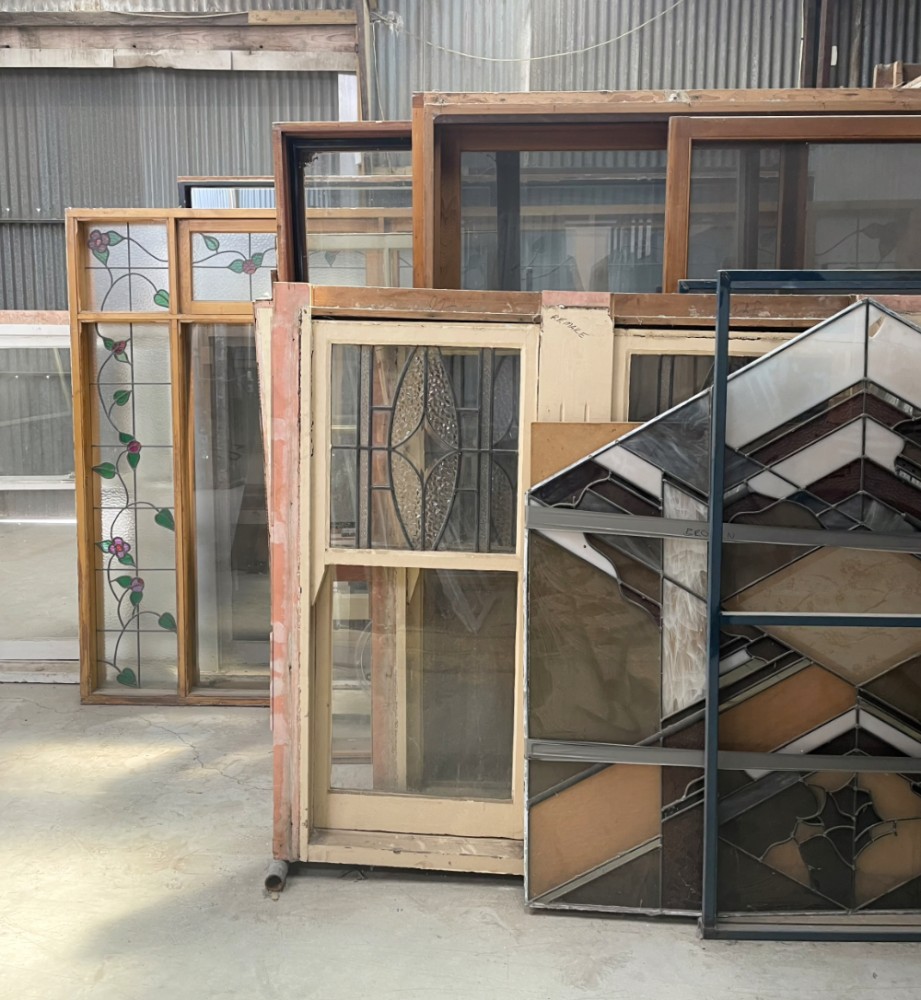
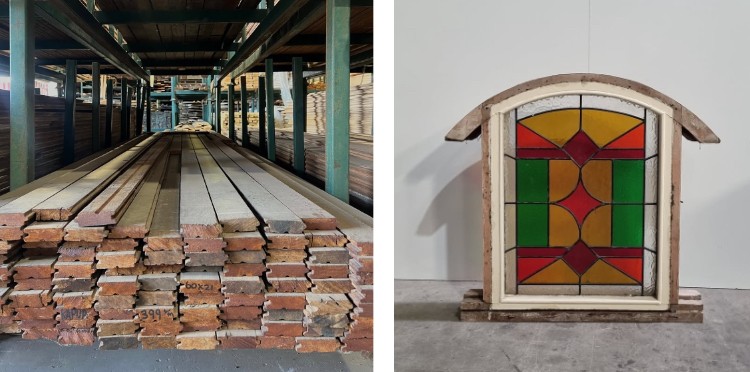
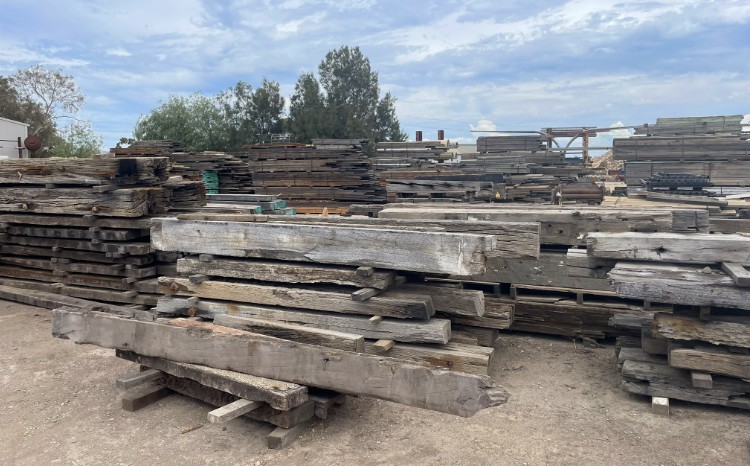
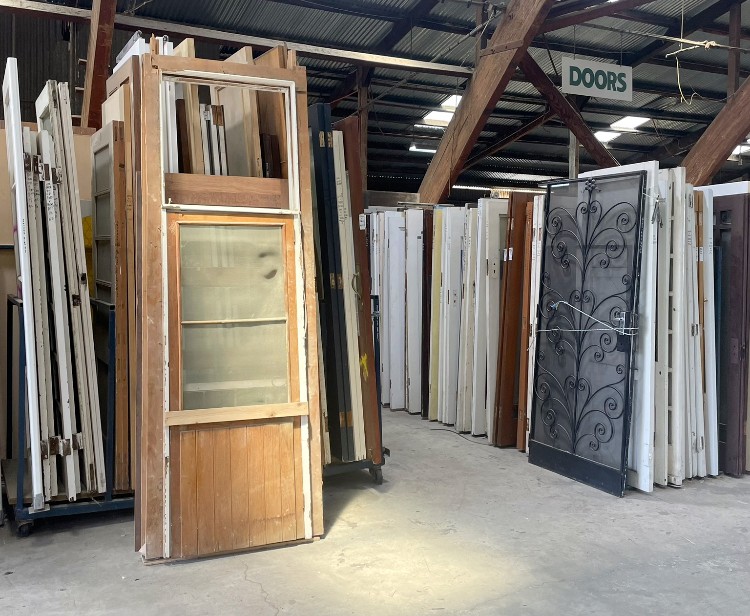
I have often found the best way to know an area is through its reclamation yards: a tapestry of local industry, changing tastes and forgotten materials that reveal the character of a place. Visiting Adelaide & Rural Salvage in 2024 was a great introduction to South Australia; stacks of rich timber covered the five-acre yard, vibrant leadlight windows, ornate wrought-iron screen doors, and architectural antiques salvaged over decades. Now, after 32 years of trading, one of Australia’s largest reclamation businesses is preparing to close on 12 June.
For 25 years, owner Paul Tucker led the business, making it an institution for renovators, builders, and architects seeking reclaimed flooring, doors, windows and timber sometimes difficult to source elsewhere. Tucker said the closure would leave a significant gap in the reclamation sector. ‘We have been one of the biggest salvage yards in Australia, not just South Australia,’ he told realestate.com.au. ‘There are other salvage yards around, but in our space, there’s going to be nothing left, unfortunately.’
Like the UK, Australia has faced steep rises in the cost of living in recent years, pressures increasingly felt by independent businesses as well as households. ‘Everybody is experiencing the cost of living crisis, I’m experiencing the cost of running a business crisis,’ Tucker said. He went on to explain that operating costs have become increasingly difficult to sustain. ‘On this site, my land tax and council rates are $200,000 a year before I even open the doors,’ he continued. ‘Insurance is 50 grand, and it just keeps on spiralling. I’ve known this has been coming for a while, and I’m going on for as long as I can, but financially it just doesn’t make sense for me to continue.’
In many ways, the closure feels at odds with the direction the Australian government says it wants construction to move in. Australia has committed to reaching net zero emissions by 2050, with increasing focus being paid to the built environment, which is responsible for around 25 per cent of the nation’s carbon emissions*. Construction and demolition waste, meanwhile, accounts for close to 40 per cent of the total waste generated nationally, making it one of Australia’s largest waste streams.
Attention is finally shifting to embodied carbon; the emissions from producing and shipping new building materials across global supply chains. Australia imports billions of dollars’ worth of processed timber and building materials each year, much of it shipped thousands of miles before reaching construction sites.
Businesses like Adelaide & Rural Salvage had spent decades recovering and recirculating usable building materials long before circular economy and embodied carbon became common industry terms. Their closure raises questions about the extent of support for businesses already engaged in material reuse, at a time when governments are publicly committing to more sustainable construction.
Tucker said a past study found the business diverted about 15,000 tonnes of material from landfill each year. With the yard’s fleet of demolition “strippers” soon gone, he fears much more reusable material will be discarded. ‘Taking us out of the space, there’s going to be virtually nobody doing it, so it’s all going to be heading to landfill,’ he said.
Beyond the environmental cost, the closure means the loss of materials that are increasingly difficult or impossible to replace. ‘All that timber is recycled and unique, so you can’t get it anywhere,’ Tucker said. ‘It’s all old-growth timber. You can’t buy jarrah anymore; they’ve stopped milling it.’
While Australia has a longstanding culture of salvage and reuse, few businesses match the scale of Adelaide & Rural Salvage. Its closure will be felt not only within the local community but also in the disappearance of a major resource at a time when Australia is attempting to move towards a lower-carbon construction industry.
Even after public closure, the site won’t disappear overnight. For a time, the vast Wingfield yard will operate by appointment as decades of salvaged doors, windows, timber, and architectural pieces are gradually cleared.
- - - - - - - - - - - - - - - - - - - - - - - - - - - - - - - - - - - - - - -
Statistics taken from;
*The Green Building Council of Australia
**Australian National Waste Report 2024
Story Type: News