First fix, electrical and plumbing were largely done using new products out of necessity. However, the second fix comes with a much greater opportunity to use antique and reclaimed items. Amongst many professionals, there is a reluctance to embrace the use of secondhand fittings. Common arguments are things like, ‘you can’t get the replacement parts’, ‘they don't have standard fittings’, ‘they won't conform to regulations', ‘it'll be imperial sizes and not comparable with new metric fittings’. Most of these arguments are true to an extent, but none are insurmountable, and some are easier to resolve than others. We have used nearly all secondhand light fittings and bathroom items. These being items that we have from stock. We also used some secondhand kitchen appliances along with our reconditioned Aga.
Electrical
The issue with new electrical installations is that UK regulations require an electrician to sign off on the work. Many antique items can be adapted to ‘conform’ to modern standards; light switches, for example, can be earthed, made child safe and backed by non- combustible material, thus making the switch conform to the spirit of the legal requirements, but the electrician will still find it difficult to '‘sign off” the work without a Kitemark or part number.
We have not used reclaimed light switches just because of this issue, nor have we used reclaimed sockets or recessed ceiling lights. However, all the other light fittings are old, second-hand or antique. Mostly, our electricians or the place that they bought from has rewired them. They have been double-checked by the installing electrician.
There are many specialist antique and vintage lighting dealers across the country, most of whom will supply rewired lamps ready to install. If you want to do it yourself, the parts required for most old lights are still available to purchase, however, it can be confusing and difficult to select the right fitting for each lamp, and it still needs to be installed by a qualified electrician.
I did not do much lighting in our shop for the simple reason that we never had the ceiling height to display large chandeliers and Edwardian opaline pendant lights. So we have had to buy some lights specifically for the build rather than use them from stock. We did have some interesting items, such as a wall light we manufactured from carved alabaster, some deco ceiling lights with original flambeau glass shades, and a staircase chandelier that I acquired many years ago from a large hall outside Preston
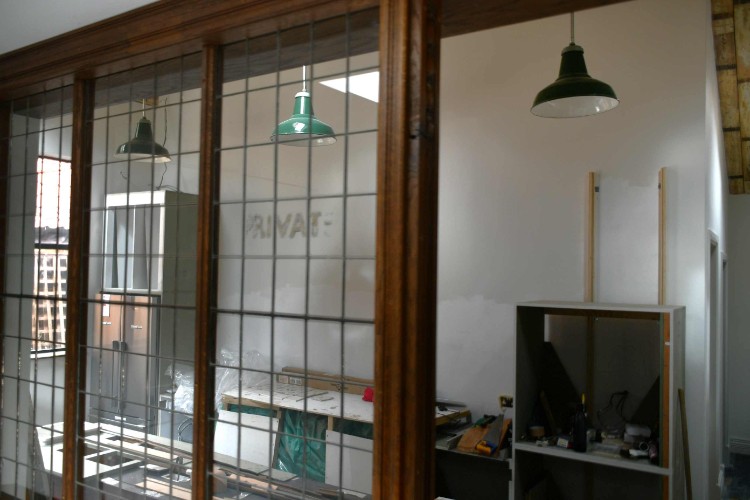
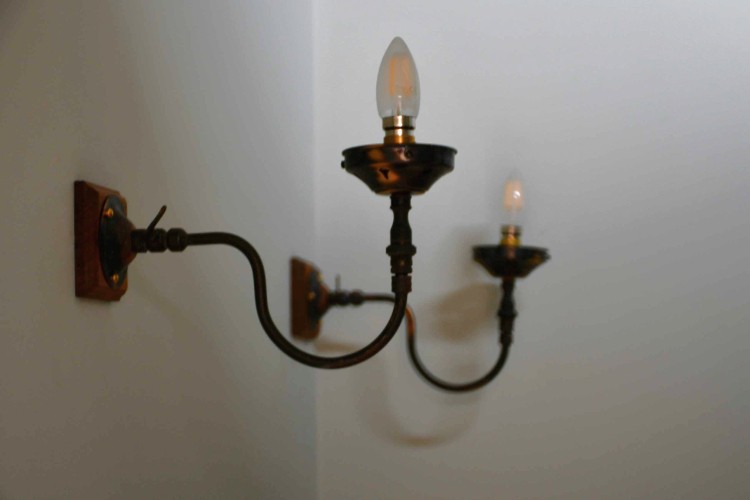
Our kitchen has full height ceilings, and is quite industrial in look, hence we have hung large vintage green enamel factory shades, but in most of the other rooms, where the ceiling heights are not so generous, we have mainly lit them with wall lights. I find that old Victorian gas lights are very versatile, and although sometimes hard to wire up, make good, simple period looking lighting.
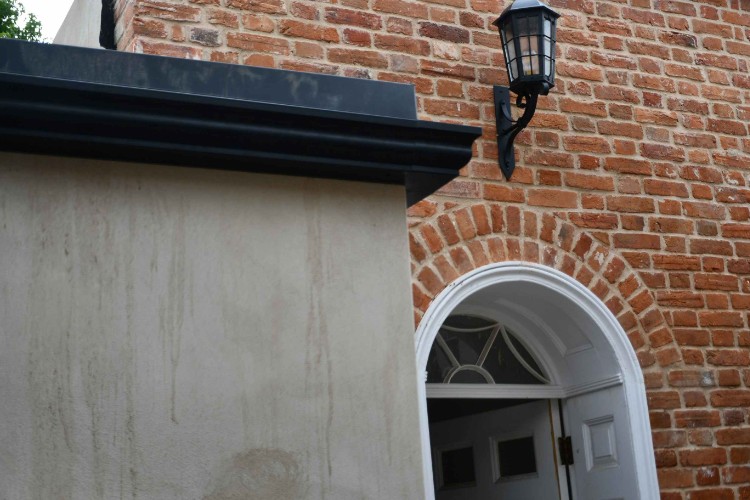
We have bulkhead lights for outside and a lantern over the front door. This possibly sounds like a complete mix of styles, but hopefully each fits into the space and surroundings.
Kitchen
I like kitchens. They are my favourite rooms in any house. This being that I like to cook, eat and drink! So, designing the kitchen is important to me. It all started with a job we did at a large Norfolk property, The Grange, where the owners decided during their renovations that they didn't want the contents of the scullery. We carefully removed the doors and shelving, which included a pair of 8 ft high laundry cupboard doors, 2 pairs of standard height doors and a set of 4 pairs of undercounted cupboard doors. As we removed them, I was thinking that, being rare to find a complete set, these could be used in our project. With our high ceiling in the kitchen, the large doors became the starting point for the kitchen design.
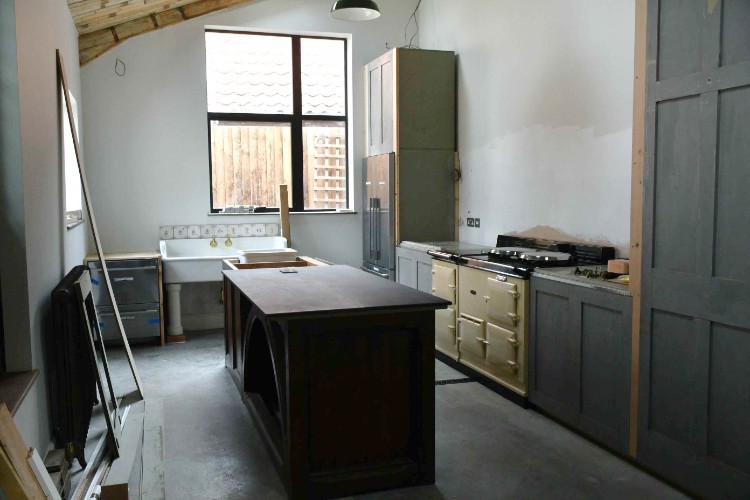
We adapted an altar table, which was no longer required in a local church, into a kitchen island and made some drawers from reclaimed pine boards cut from joists. The worktops in slate and marble are panels from the side of some baths.
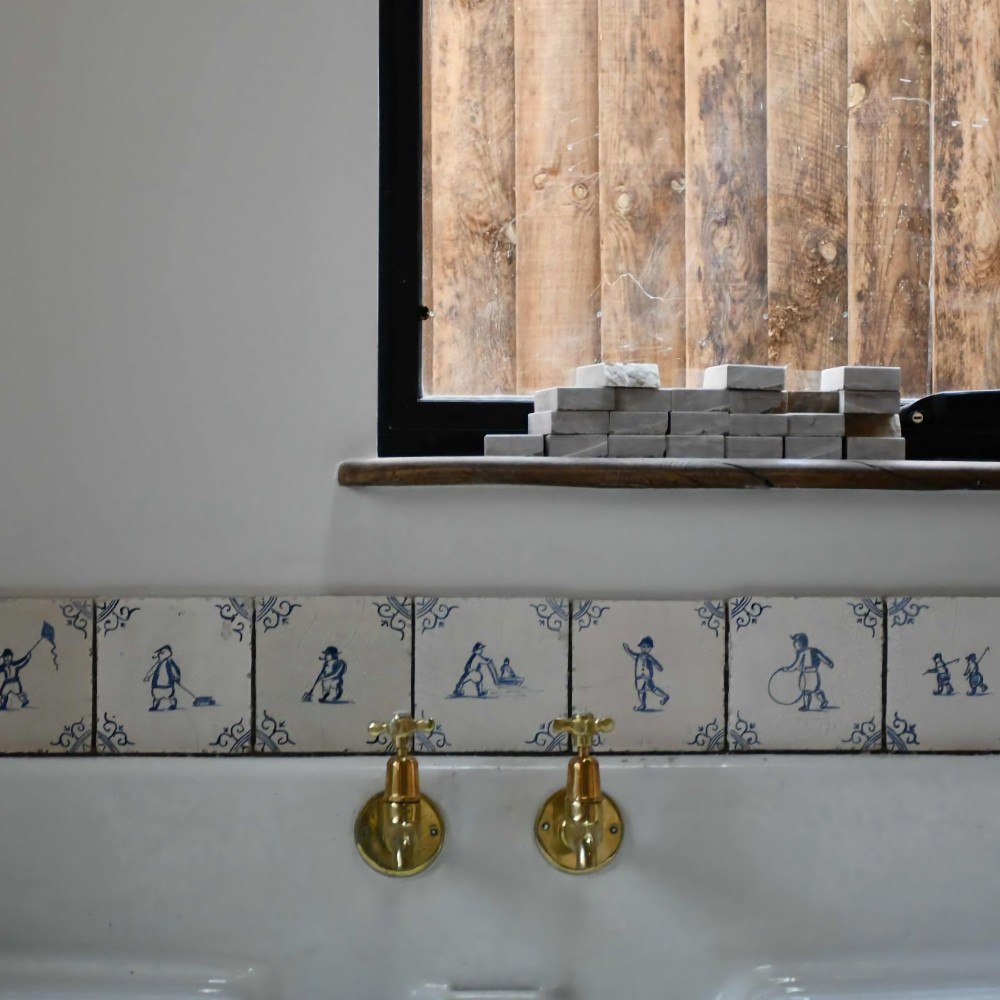
The large sink on ceramic legs came from an outhouse in Horwich near Bolton. Possibly made by W R Pickups & Co Ltd. makers of fine fireclay products until 1912 in Horwich. The hardest bit was finding a pair of taps to suit, as good kitchen taps from this era are getting scarce.
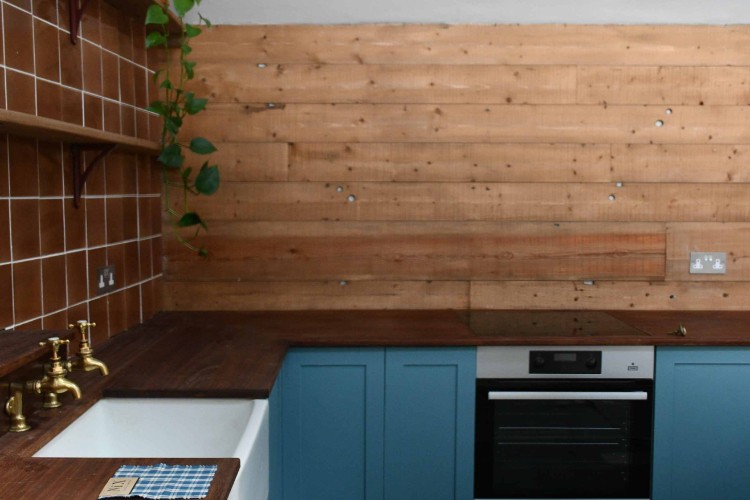
Wall tiles are also very difficult to find reclaimed. They were often attached using cement based adhesives making them very hard to remove from the wall. I managed to find mine from a fellow dealer, who, over dinner after a trade function, explained how he had removed them all himself. They were not cheap, but I do believe in rewarding endeavour! The old tiles have a warming patina, like an old piece of oak, and a great variety of tones has developed over the years. We have also introduced our small collection of Delft tiles as a splashback.
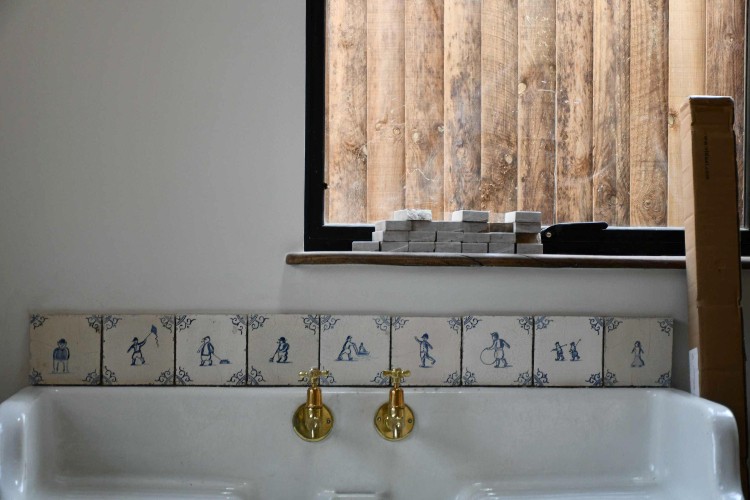
Then there is the Aga. A much-loved four oven cream Aga that we were offered by a lady, whose farmhouse was being demolished to make way for a care home. At the time I had some customers restoring a Norfolk hall and they expressed a desire to buy the Aga. A deal was done, but at the eleventh hour our customers discovered they could not use it, leaving us with the Aga. After about 6 years at the local Aga specialist store, it was converted to eco-electricity and shipped to Hingham for installation. Even after all the extra costs, it was still much cheaper than buying a new range and comes with all that history.
We have two kitchens in this build, as we have a one-bedroom annexe with a separate entrance. In this kitchen, smaller and simpler, we have used Iroko laboratory tops for the work surface and our old shop counter, originally from a bakery in Little Snoring, North Norfolk, as an island. Iroko, which is a tropical hardwood from Tropical Africa, sometimes referred to as African Teak, was widely used instead of Teak where a water and rot resistant timber was required. Hence, it is often found as worktops in laboratories and schools. Reclaimed Iroko makes a beautiful, practical work surface in kitchens and only needs to be oiled to create a durable, attractive feature.
Fixtures
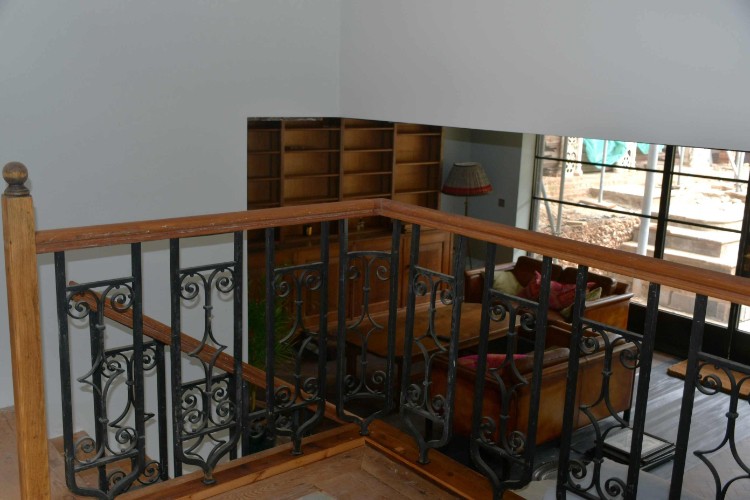
Having moved from a 15h Century hall house to this new property, not all of our furniture is going to fit in, but we shall use the majority of it. We are not precious about mixing periods, but, as a rule, I think we aim for quality in materials and design and simplicity in look. We have purchased a pair of mid-century Danish sofas and an oak cabinet, which dates from the 1930’s, from Charterhouse School for the living room, where they are flanked by some Edwardian pine and iron balcony railings. With our new ‘Crittal’ style metal windows and the stained parquet, this space is beginning to take shape.
Story Type: Columnist