London West, UK
London Design Festival returned to the capital for its 17th year last week with a citywide celebration of design and craft. This year’s programme had a strong focus on sustainability, with designers responding to the environmental issues we face and works that showcased reclaimed materials. Here are some of my highlights:
Sea Things, Sam Jacob
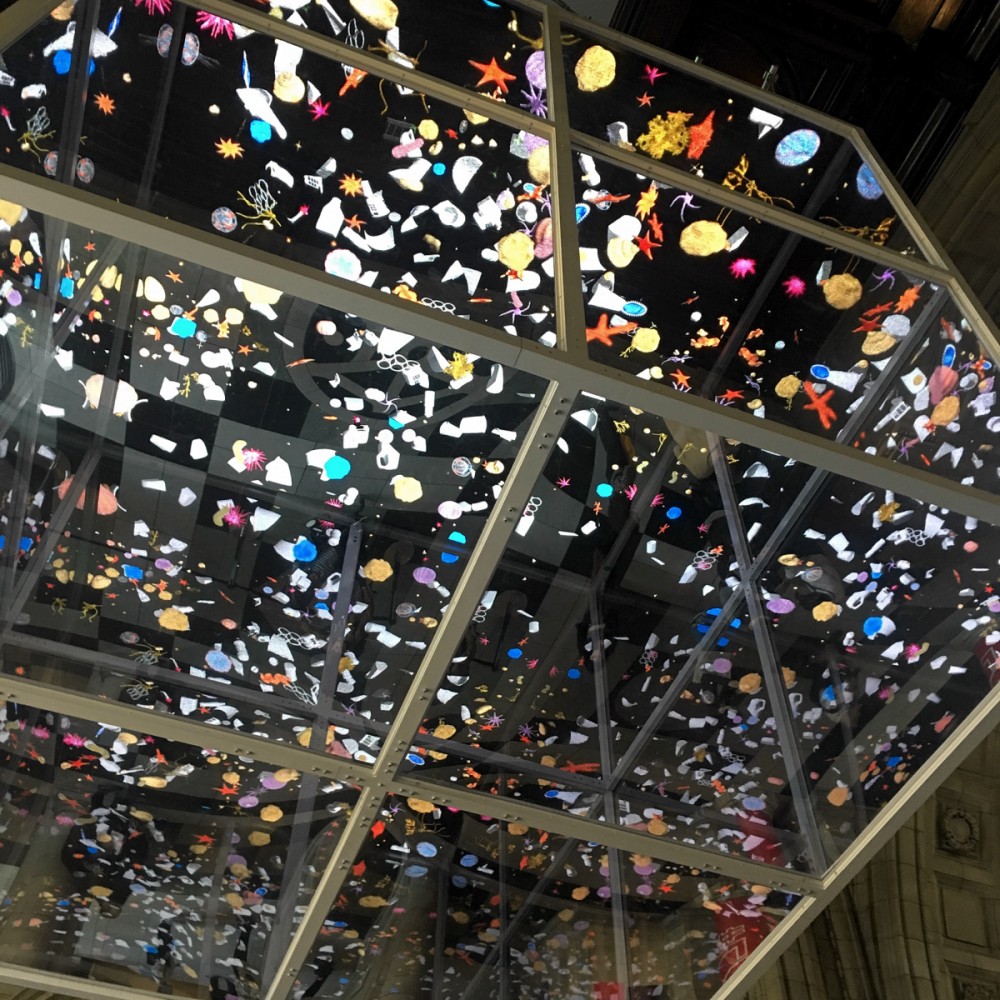
Architect Sam Jacob transformed the grand entrance to the V&A with the Sea Things installation, which highlighted the ever-growing problem of ocean plastic; the urgent need to consider the life cycle of a product and design for its future-use. A large two-way mirrored cube was suspended above the foyer with an animated motion graphic, inspired by a Eames pattern in the V&A’s Textiles collection. The 3 minute animation starts in 1907, the year that Bakelite was launched – one of the first commercial plastic products, the man-made waste rapidly builds with the film ending in 2050, the year the Ellen MacArthur Foundation predicts that the volume of plastic will be greater than marine life in the world's oceans.
Please Be Seated, Paul Cocksedge
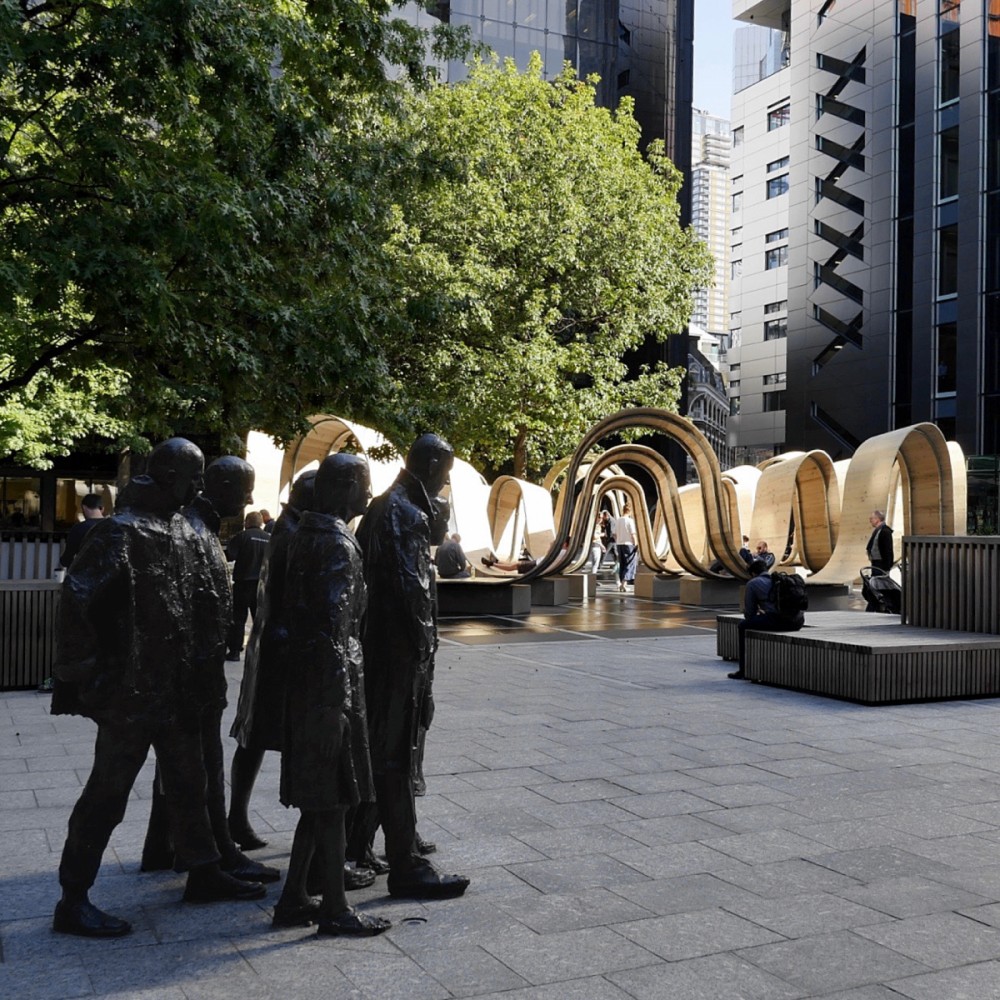
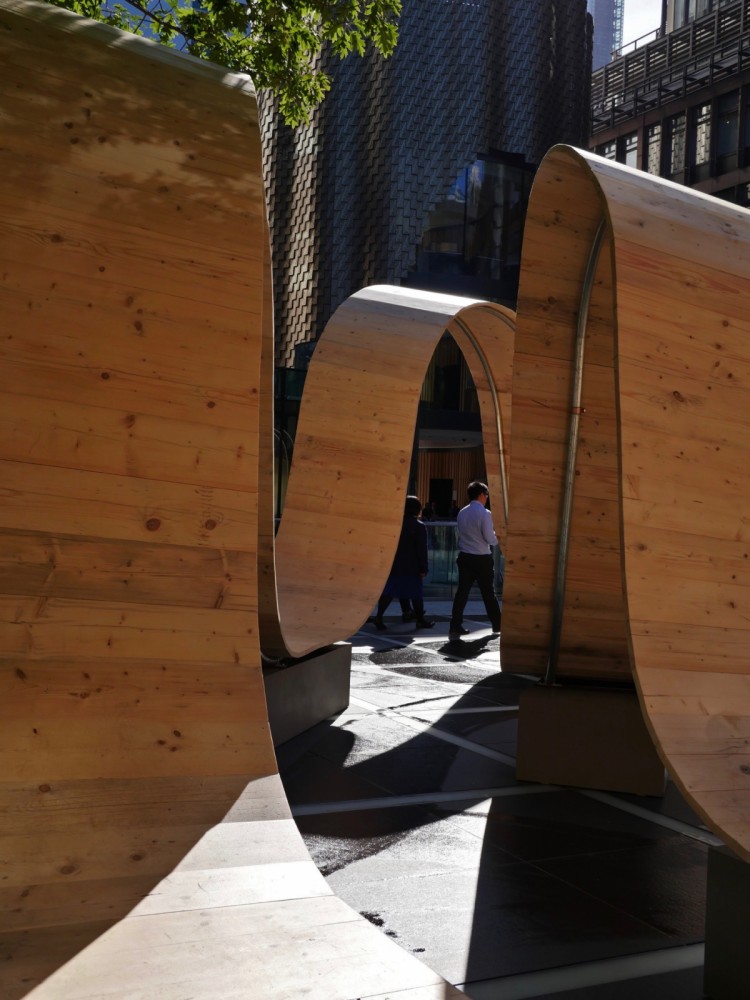
Please Be Seated was created by British designer Paul Cocksedge, sitting in Finsbury Avenue Square (alongside George Segal’s bronze figures). The large-scale community installation is constructed from over 1,000 reclaimed scaffolding planks, in collaboration with Essex-based interiors company White & White. ‘It walks the line between a craft object and a design solution.’ said East London-based Cocksedge. The curves of the structure certainly work in harmony with the Square’s everyday activity, allowing people to sit (recline) and relax or walk under the installation. Please Be Seated is open until the 11th October.
Disco Carbonara, Martino Gamper
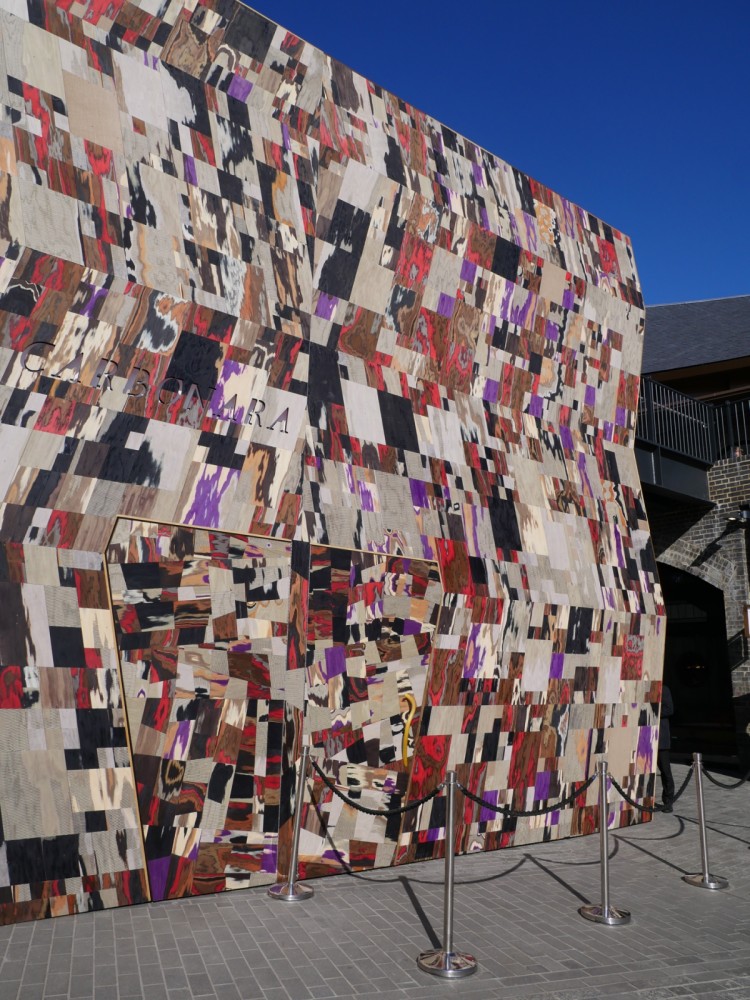
Designer Martino Gamper created a fake front for ‘Disco Carbonara’ at Coal Drops Yard in London's King's Cross, with the tiny disco holding just a few revellers at a time. Inspired by the concept of a Potemkin village, the term comes from stories of a fake portable village built to impress Empress Catherine II by her lover Grigory Potemkin during her journey to Crimea in 1787. The patchwork cladding is made with waste offcuts from the wood veneer industry, the designer intends to produce tables and other items from the wood surface once the installation is taken down.
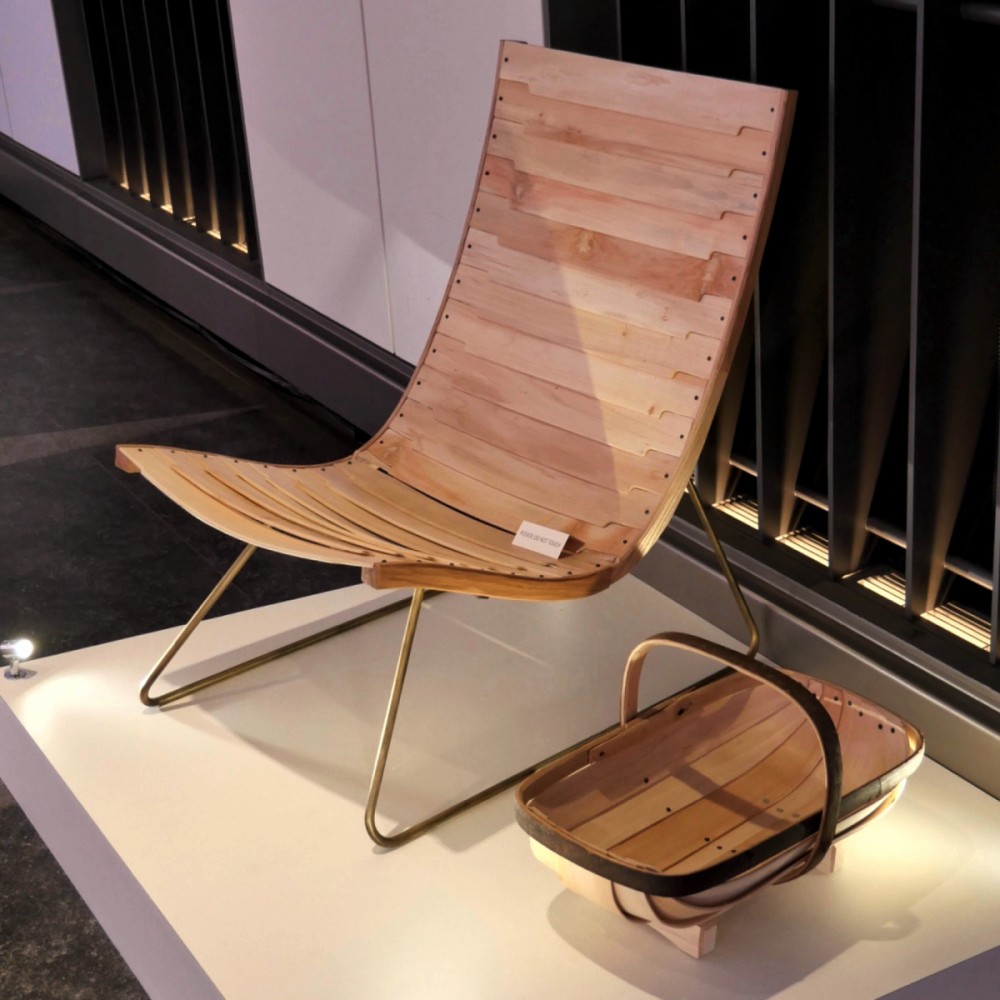
The Willow Chair, Peter Kovacs
The much instagrammed LED Light Tunnel at King’s Cross was the setting for the Rado Star Prize exhibition, which showcases pieces by young British designers. Voted Elle Decoration Readers’ winner Peter Kovacs, Willow Chair was constructed using an adaptation of the traditional Sussex trug making techniques, preserving a craft that dates back to the 1600s. The trug is a basket made from willow slats, making it light weight, yet robust, the designer used reclaimed willow from cricket bat manufacturing to create the curved seat.
Aesthetics and Ethics: Style and Sustainability in Design
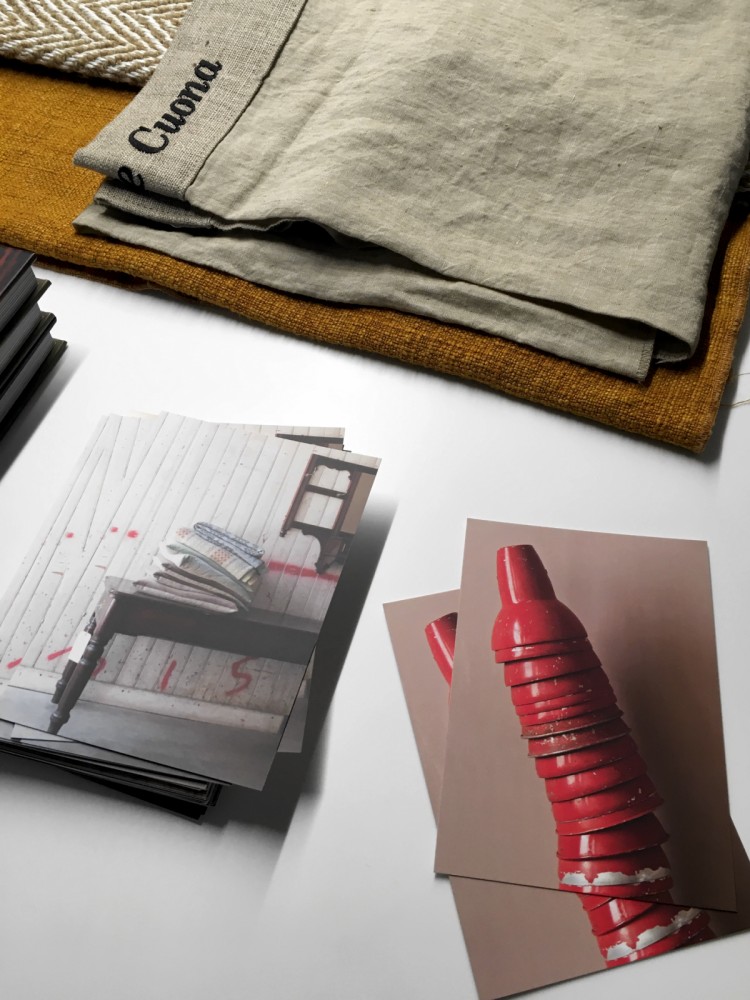
Held in de Le Cuona new flagship store on Pimlico road, journalist Helen Chislett was in conversation with Bernie de Le Cuona, Founder and CEO of de Le Cuona, Maria Speake Co-founder of Retrouvius, a Salvo Code member and Oliver Heath, specialist in sustainable and biophilic design. The panel reflected on what sustainability meant to them, ultimately each speaker defined it in terms of respect.
Oliver Heath discussed a more human centred aspect to sustainability, defining a sustainable building as ‘one that respects; by minimising its impact on the environment and keeping its materials in a loop of usefulness’ as well as ‘supporting the intended function of the building to keep people feeling both physically and mentally happier and well.’ Maria Speake spoke of sustainability from a reuse point of view, demystifying ways in which materials can be reused, and designing so that you don’t limit reuse in the future. Respecting ‘the fact that all materials have come from the planet living and they continue to move and change in different ways as we do…whether it is timber that expands and contracts relating to moisture, or it is a linen that is effected by ultraviolet light coming in through a window.’ The changeability of materials can be a positive thing in design.
Heath concluded that we all need to recognise the power we have; ‘Whether it is the spending power in our pockets, or having the creative vision (like Maria) to look at something, turn it upside down or back to front and go this is actually amazing, it just needs to be reframed in another way’. We all have our part to play in creating a more sustainable world.
London Design Festival
Story Type: Exhibition Review