Greater Manchester, UK
Reuse of antique reclaimed and salvaged building material saves energy and reduces climate change, but every year less (not more) is being reused. Over the past twenty years the emphasis has shifted to recycling, which with building material usually costs more in energy than it saves.
Around 100m tonnes of building material is recycled, of which three million tonnes is easily reusable, but less than 300,000 tonnes was saved for reuse in 2014 compared to 1994 when more than a million tonnes was reused. The impact of this in energy terms was that one million tonnes of carbon dioxide was being saved by the UK reclamation sector in 1994, but only 300,000 tonnes is being saved now.
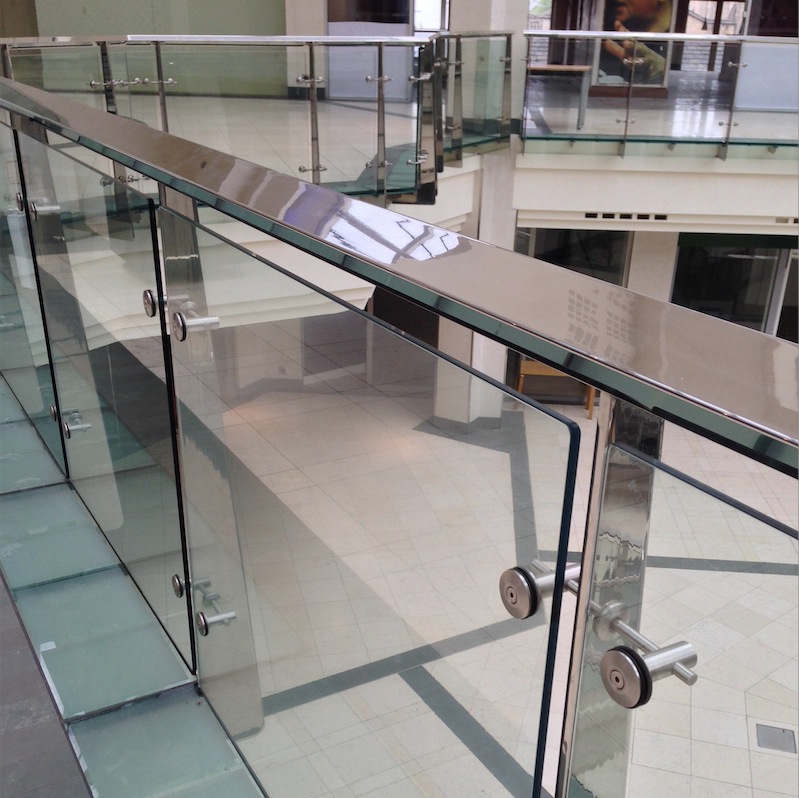
Three months ago Lancs & Cumbria Demolition, which has a policy of 'reuse before recycling', stripped out the interior of the Manchester Corn Exchange and saved the easier to sell items such as reclaimed York stone flagstones and old oak flooring. Much of the metalwork and other materials were recycled as scrap, but director Graham Jolley took the decision to save 100 metres run of the toughened laminated glass and stainless steel balustrade protecting the pedestrian decks overlooking the atrium, which he advertised on SalvoWEB (see link below).
Using the ICE database it is possible to calculate the embodied energy of the glass and stainless steel saved by reusing all 100m is 128GJ (gigajoules of energy) which saved 10,675kgCO2 (kilograms of carbon dioxide) for 3,735kg of balustrade or around 3tCO2 saved per tonne of balustrade.
So what is 10 tonnes of carbon dioxide?
10tCO2 is the amount of carbon dioxide absorbed by 1,200 broad leaved trees in one year
10tCO2 is given off by burning 4,580l or 1000 gallons of petrol or gasoline in a car or truck
10tCO2 is the energy needed to make 200 iPhones or 20 MacBook Pros
10tCO2 is the energy used by an average UK household in one year
128GJ is 35MWhrs (megawatt hours)
Embodied energy is considered to be the most significant driver of climate change, but there are other environmental impacts which also affect the climate, and which reuse of reclaimed building materials and architectural salvage will reduce. These are:
1. Acidification (measured in mg H+ equivalents)
2. Eutrophication(measured in g N equivalents)
3. Fossil Fuel Depletion (measured in surplus MJ)
4. Water Intake (measured in L)
5. Criteria Air Pollutants (measured in MicroDALYs)
6. Ecological Toxicity (measured in g 2,4-D equivalents)
7. Human Health (measured in g toluene equivalents)
8. Ozone Depletion (measured in g CFC-11 equivalents)
9. Smog (measured in g NOxequivalents)
The total UK emissions for 2014 are 530MtCO2. The total reusable building material disposed of annually by recycling, energy from waste, or landfill is around 3Mt (million tonnes). If all this unsaved reusable building material embodied the same amount of CO2 as the balustrade then 10MtCO2, or 2 percent of UK's emissions, could be saved a year by salvaging and reusing more.
Note: Most of the figures above are approximate. The figures for the amount of reusable material not being saved are extrapolated from the peer-reviewed BigREc surveys.
Contact Salvo for consultancy advice on the reuse of modern salvage or carbon calculations for your own business.
Contact Salvo
Salvo online marketplace for reclaimed building materials
Story Type: Reference